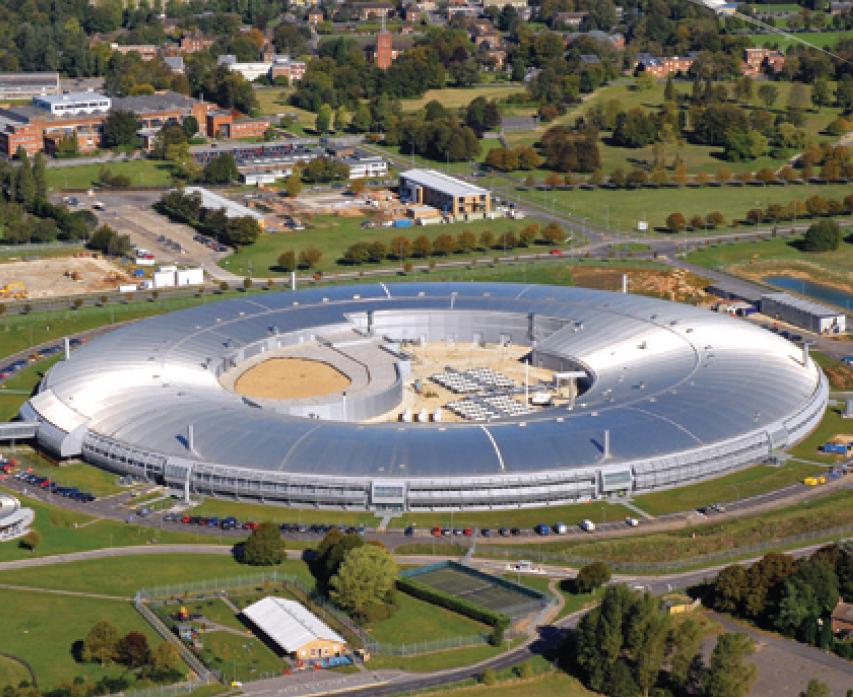
 The fourth meeting of the Red Kite Network was held on Monday 9th September 2013, at Diamond Light Source.
The meeting included a tour of the synchrotron and a full programme of talks by local speakers, focussed on the use of synchrotron radiation as a structural probe.
Programme
1:15 pm Dr. Harriott Nowell (Diamond) Introduction and Welcome
1:20 pm Dr. Steve Thompson (Diamond) “I11 Upgrade Project”
1.50 pm Dr. Philip Chater (Diamond) “Structural Chemistry Through the Length Scales”
2.20 pm Tours, Tea, Coffee and Posters in R22
3.50 pm Dr. Anna Warren (Diamond) “X-ray Imaging as a Tool for Crystal Location”
4.10 pm Jon Treacy (Diamond/Manchester) “SXRD of Metal Oxides”
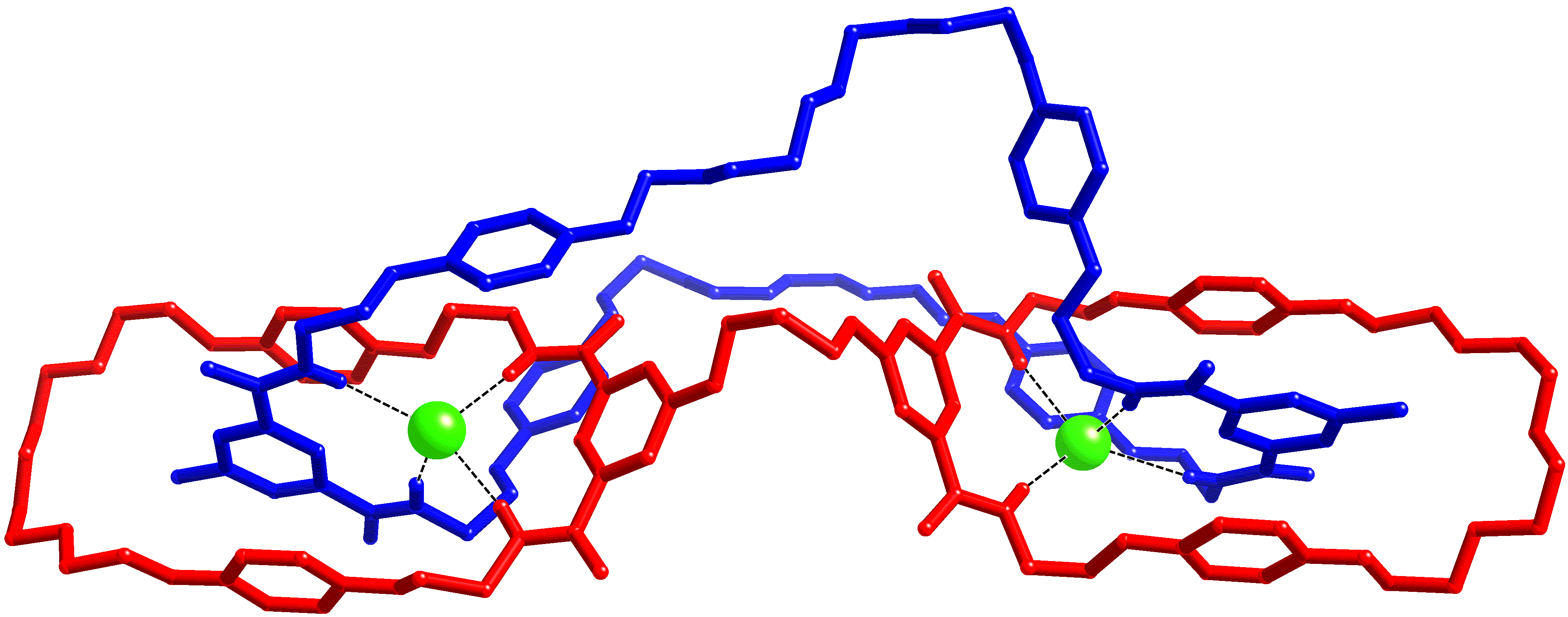
4.30 pm Rich Knighton (Oxford) “Towards Selective Anion Binding By Templated Interlocked Structures”
4.50 pm Karim Sutton (Oxford) “Big Methods for Small Molecules”
5.10 pm Drinks reception and Posters
The meeting closed with the award of prizes for best posters.
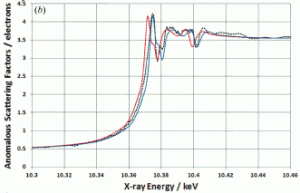 Overlapping absorption edges will occur when an element is present in multiple oxidation states within a material. DetOx is a program for partitioning overlapping X-ray absorption spectra into contributions from individual atomic species and computing the dependence of the anomalous scattering factors on X-ray energy. It is demonstrated how these results can be used in combination with X-ray diffraction data to determine the oxidation state of ions at specific sites in a mixed-valance material, GaCl2 .